
Romania’s Defence Minister Ionuț Moșteanu resigned after it emerged that he had used false education credentials in his official CV. The scandal raises questions about the credibility of a NATO member’s defence leadership at a time of heightened tension with Russia.
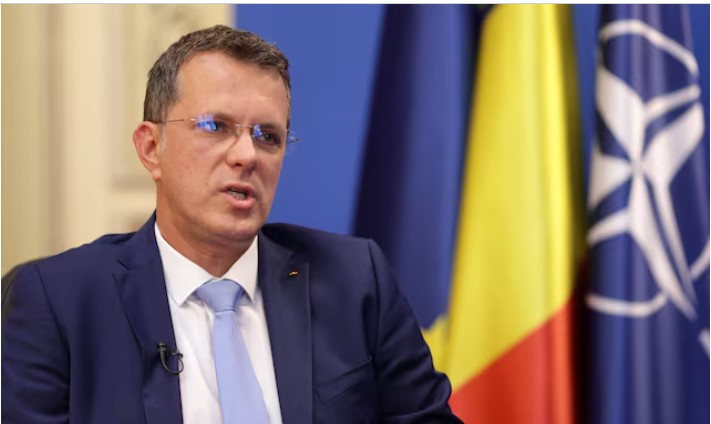
Romania’s Defence Minister Ionuț Moșteanu has resigned following a growing public outcry over false education details in his official CV. The scandal has reignited debates not only about Romanian domestic politics but also about security and credibility on NATO’s eastern flank amid the ongoing war in Ukraine.
How the Scandal Broke Out
The story emerged after Romanian media began scrutinising Moșteanu’s past CVs. In earlier versions, he claimed to have graduated between 1996 and 2000 from the “Management” department of the private Athenaeum University in Bucharest. The university, however, stated that there was no record of a student with his name in that programme and that the department in question was not even active during those years.
That CV dates back to the period when Moșteanu served as an adviser at the Ministry of Transport and sat on the boards of several state-owned companies. Since a university degree is a legal requirement for those positions, the revelation immediately raised questions about whether he had held public office on the basis of false credentials.
The “Rushed CV” Defence
As the scandal escalated, the minister issued a public apology on social media. Moșteanu admitted that there were errors in a CV drafted “in a hurry” in 2016 and said he regretted not correcting them earlier. He claimed that his actual undergraduate studies were completed at another private institution, Bioterra University, and that he had obtained his degree there in 2015.
However, that explanation did not clear the doubts. Over the years, different versions of his CV appeared to show:
- Different universities and different graduation dates,
- No mention of the alleged Bioterra diploma at the time he says he received it.
Taken together, these inconsistencies look less like a simple typo and more like a deliberate attempt to embellish his academic background.
Political Pressure and Resignation
The controversy quickly spread beyond the media and became a political issue. Several opposition parties publicly declared that it was unacceptable for a minister responsible for national defence to remain in office after such revelations and called for his resignation.
Under mounting pressure, Moșteanu eventually stepped down. After his resignation was accepted, the prime minister announced that the economy minister would temporarily take over the defence portfolio. A new defence minister is expected to be appointed from within the governing coalition.
“Russia Is Attacking, We Must Not Be Distracted”
In his resignation message, Moșteanu tried to shift the focus away from his personal scandal. He argued that Romania and Europe were facing aggressive policies from Russia and that national security and defence should take precedence over debates about his education history. He said he did not want old mistakes in his CV to distract from the country’s security agenda.
This framing points, on the one hand, to the very real tension in the region, but on the other hand it has been criticised domestically as an attempt to cover up a scandal with geopolitical rhetoric.
Why It Matters
Several factors make this more than just a personal CV issue:
- The Role: Defence Minister
Moșteanu was responsible for the defence of a NATO member state that borders Ukraine and faces security risks in the Black Sea region. In such a position, trust, transparency and merit are not just formalities but strategic necessities. - Legal and Merit-Based Concerns
The allegedly false education details were not just about prestige. They appear to have been a formal requirement for some of the public offices he held. If he did not actually meet those requirements at the time, his appointments could be considered legally questionable. - A Pattern Rather Than a One-Off
Romania has previously been shaken by plagiarism scandals, dubious academic titles and contested doctorates involving political figures. This new case revives the question of whether the country’s vetting and oversight mechanisms are truly functioning as they should.
In the end, the fake diploma scandal surrounding Romania’s defence minister is more than a personal fall from grace; it opens up a broader debate about politics, bureaucracy and the credibility of institutions in a time of heightened security concerns.
Noch keine Kommentare. Schreiben Sie den ersten Kommentar.